About Chloe and her Neurodivergent /Diagnosis Journey :
When I was in primary school, my parents suspected that I needed a bit more support than other pupils and so my mum fought for me to be assessed for dyspraxia. The teachers told my mum that they wouldn’t assess me for dyspraxia because they did not think I had dyspraxia, and they knew this because they were doing a course on dyspraxia. Later in primary school, after some struggle I was eventually assessed and given a diagnosis of dyscalculia. When I moved up to high school, I was informally diagnosed dyslexic, and some extra support was put in place. Although bizarrely this diagnosis was then later removed from me at school. Why ? I still don’t know.
When I was at school I was told I wouldnt make it anywhere. By goodness they were wrong! Nursing, vet nursing, events and food careers were my top choices. However, I opted to study hospitality when I first left school as I didn’t feel ready at this point to start nursing. (Looking back this was a very wise choice).
I attended college where I completed a HNC and a HND in Hospitality Management, however, it wasn’t until I went on to do my International Hospitality Management honours degree that I was formally diagnosed with dyslexia, dyscalculia and dyspraxia. Before I started my first university course, I reached out to the inclusion team at my university to inform them that I had previously been informally diagnosed with dyscalculia and dyslexia at school. The inclusion team organised for a formal psychological assessment to be carried out, free of charge which is when I was officially diagnosed, and an official evidence-based report formed the reasonable adjustments for my learning. It was the first time I felt education had recognised my difficulties. Proper support was put in place! I then went on to do a Master’s degree in Digital Marketing at the same university, and then onto my nursing degree which has formed my current career. I am now a registered nurse working in the perioperative environment.
It wasn’t until my 3rd year of my nursing degree that I was diagnosed with ADHD via the private route in November 2022. It has been well worth the investment, I would still be waiting now if I hadn’t gone privately.
How did I suspect I had ADHD?
I’ve always known that I’m different. I’ve always been perceived differently by people everywhere I have gone, and I have definitely experienced unconscious bias and indeed conscious bias throughout my whole life. I was bullied at school for being different and perceived as incapable by my teachers at school. The diagnosis of ADHD was not a surprise to me as I already had neurodivergent diagnosis’s. I connected with a lot of the characteristics that I had read about ADHD.
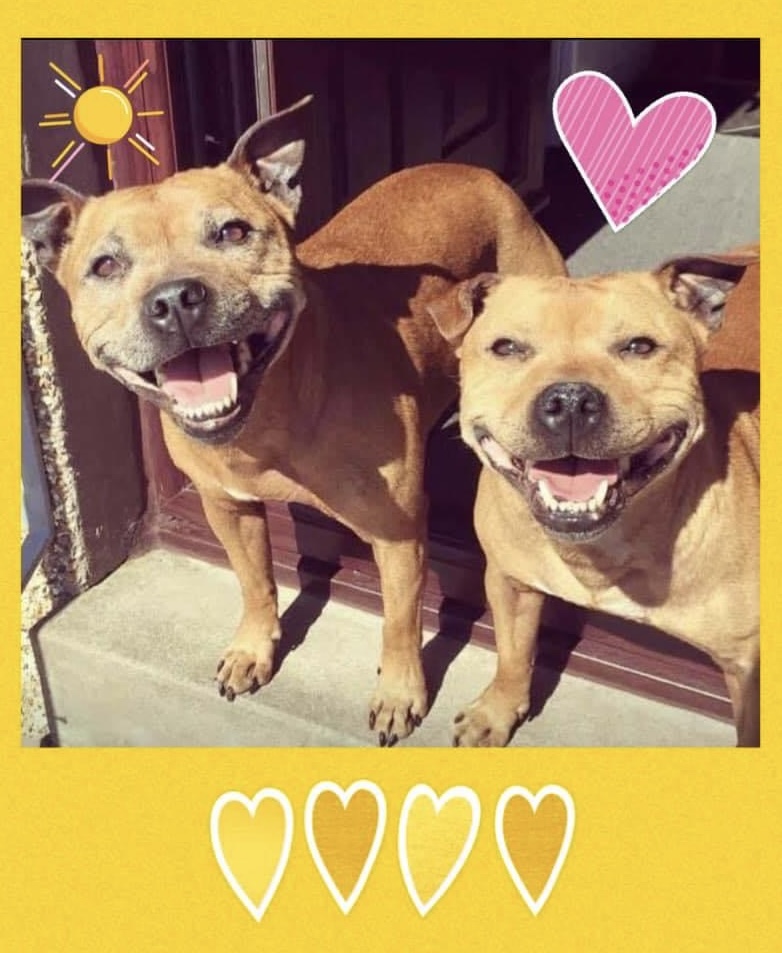
It was the passing of my beloved 2 dogs just 6 weeks apart from each other that was the pinnacle time that I realised I might have ADHD.
My mum also recognised this in me having done some research into it. My mum highlighted that there was an increase in misdiagnosis among women. It all made sense. I often wonder how I didn’t recognise this before now because looking back as a child I either talked excessively or if I didn’t have something to say I would sing and I have always had a project or a million projects on the go! My brain is constantly on the go it never shuts up. I think I must have masked quite a lot prior to my diagnosis, but I would say that since being diagnosed I don’t mask as much, as I feel like it’s more acceptable for me to just be myself because this is who I am, and masking is exhausting! I also think that it might have been easy for this diagnosis to be missed as I was previously diagnosed with OCD and anxiety, both conditions that can overlap with ADHD and come hand in hand with neurodiversity. I do not tend to share this part of me, but it is a part of me, and we need to break the stigma! What was a surprise to me, but what makes sense now is that I am also diagnosed autistic. I do not have all autistic characteristics, but this diagnosis has also answered a lot for me about myself.
All of my diagnosis have provided me with answers about myself and has enabled me to start a journey of treatment which so far has been life changing. The diagnosis has also enabled me to form understandable strategies that work for me and reach out for support to be at the same stage as everybody else. The word equity is how I should describe reasonable adjustments; I haven’t had get extra time just for the sake of it. I would have far rather not have had additional support and be able to do what others can, but I need the support, to be at the same level as everyone else and I am not ashamed of that. All of my diagnoses have enabled me to receive the support that I need to manage and be successful. We all learn in different way and at a different pace.
Support I have received.
When I started my nursing degree, I met with an Inclusion Champion within the nursing school who helped me identify what support I might need for going into placement. These reasonable adjustments are sent to my placement area prior to me starting my placement. I also always have a calculator and notebook in my tunic pocket so I can write notes so I don’t forget information and to help me with drug calculations.
I received Disabled Student Allowance during all my university courses. I have been funded for a laptop with resources on it, like Read and Write Gold which helps me with spelling and grammar, I was provided with recording equipment which helps me with my slow processing and my memory. I also have Dragon, a speech to text app, but I think the read aloud function is probably the best thing that I use. I also received a printer and I am funded for ink and paper on a yearly basis. I must print everything to process written information and I use highlighters over all my documents. DSA also fund proofreading for me which is extremely supportive. Importantly, we have a study skills department in our university which is open to all students so it is inclusive for everybody and they taught me how to write academically. My reasonable adjustments include extra time in exams and the use of a calculator.
What is like being a neurodivergent nurse?
There are highs and lows. It is unfortunate that I have faced some seriously unjust situations within practice areas, specifically during my training, which I believe to be a result of poor understanding of learning differences and neurodiversity as a whole. This is why I Founded SUNNO
I think nurses need to understand what it can be like to live in a neurodivergent nurses’ shoes and recognise that everyone has their own way of learning and working. Providing that individuals can do their job safely they should not be judged for their own way of working and learning. For me my neurodivergences can make it difficult for me to spell or pronounce really complex medical words. Sometimes it can be challenging to retain information, however I have my strategies to counteract this (good old note book and pen). I use colours and patterns to remember and learn certain tasks like documentation or calculations. I use my calculator to check my drug calculations and triple check everything before administrating to make sure it is safe. I may need instructions or new information repeated more than once in order to process it properly. I might find some lights, noises, and smells overly powerful for my senses, but I still manage to zone them out to do my job well. I find that my ADHD/OCD drives the perfectionism in me which is why I have such high standards and I can be really hard on myself if I don’t get things bang on. However my neurodivegence and OCD can also bring the best in me to deliver high quality patient care, and teaching for students. Theatres is a perfect place for someone with OCD prevision so I channle my inner ND in a way that works so well for me.
I have had so many challenging experiences as a neurodivergent individual since school and into my adulthood. It is only very recently that I have found myself and my tribe and feel really content.
Although experiencing the unjust attitudes of many of the years has been a blessing in disguise because it has embellished this passion in me to raise awareness of neurodiversity in nursing and educate people in what neurodivergent nurses can bring into nursing, found my Neuro-includive community choir Umbrella A Cappella and create this inclusive ND tartan among other neurodivergent projects.
Celebrating all the amazing skills and talents that neurodivergent can bring within society instead of focussing on the challenges that neurodivergent individuals have is such a significant aspect of raising awareness. I urge those who don’t understand neurodiversity to take the time to learn about it, reflect upon your own biases about neurodivergent people, please be patient and kind to neurodivergent people, please don’t assume neurodivergent people are all the same and need the same support we are our own person. The simplest thing would be to learn about each individual and ask them how you can support them, or indeed if they require any support as some individuals may not.
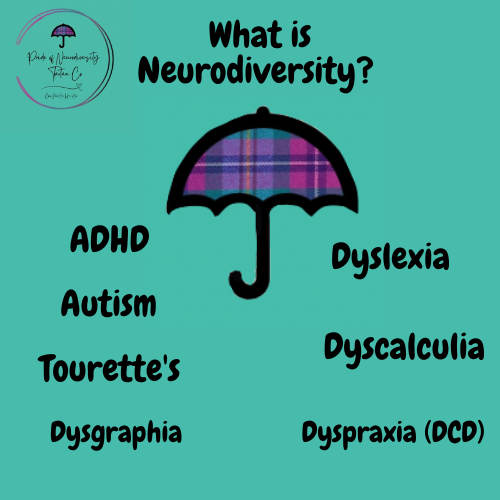
Click the image to learn more about neurodiversity
When I was at secondary school, I was handed a college perspective in fifth year and told to leave because they didn’t think I would be able to go to university or do very much in life. This reaction had a huge impact on my confidence and led to serious imposter syndrome, however with the incredible support of my family I have achieved an honours degree, a Master’s degree, and a nursing degree all while doing several projects to help others. I aspire to do further higher education in the future and make a difference in the world. I feel like I’ve proven who I am to those that didnt belive in me. It just goes to show that just because someone has a learning difference does not mean that they cannot achieve! There are so many neurodivergent people that have achieved many amazing things in life!
I believe that my neurodivergence is my superpower and the experiences that I have had as a neurodivergent individual has moulded who I am and the things I have achieved in my life so far. We need to celebrate neurodivergent individuals and accept them as a huge asset to this world!
My neurodiversity work
It all started here (Public speaking out the blue)
This experience is very real for me.
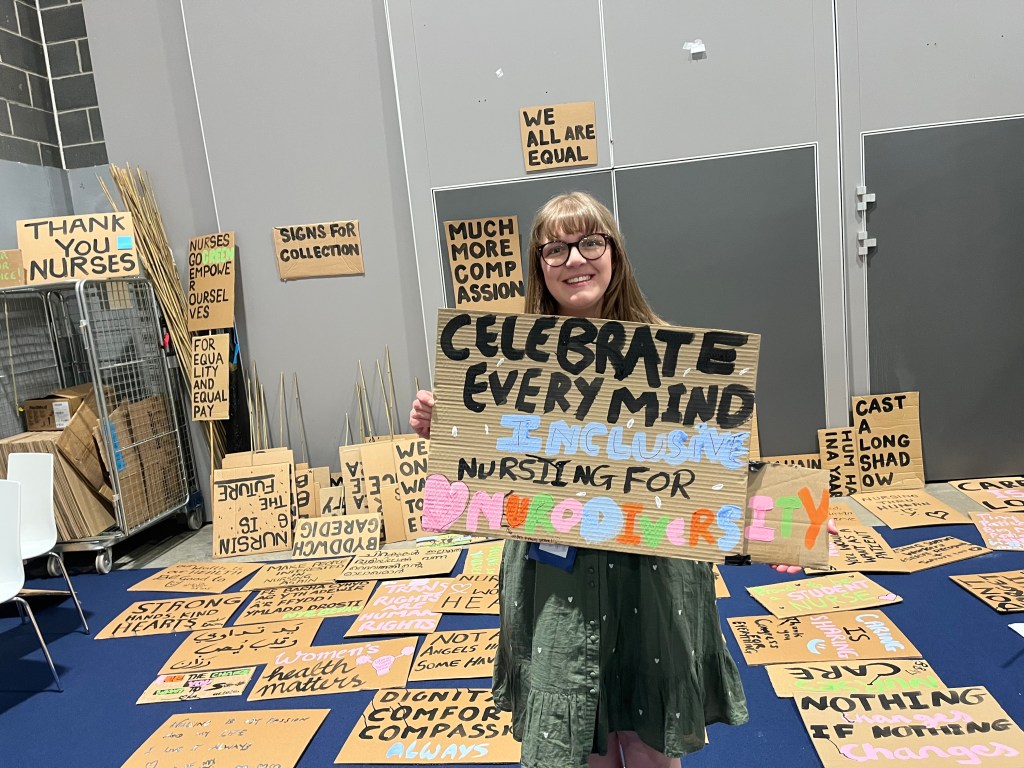
I want to make a pledge that I will do everything in my power to support student nurses who have any of these difficulties. We should always be supported and valued. I have the fire 🔥 in my belly to make it happen! @RCNScot@theRCNpic.twitter.com/u3rnlW4tIM
— (Chlo Jack On her Mac) (@ChloJaconherMac) June 7, 2022
I then Set up SUNNO and Co (An educational and supportive network for medical professionals to come together and learn about neurodiversity).
More awareness of neurodiversity can change the misconceptions and stigma.
“Anything is possible if you just believe!”
Hello,
I’m Chloe
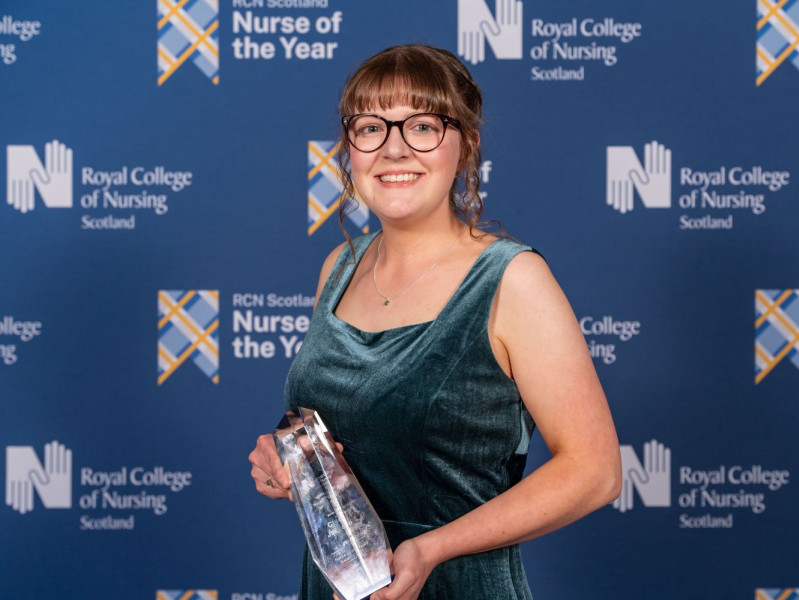
Welcome to my website. My name is Chloe I am a 30 year old registered Nurse, recognised as 2024 RCN Scotland Student Nurse of the year winner for my efforts in advocating and supporting neurodivergent nurses.
I am neurodivergent myself. I was diagnosed with Dyslexia, Dyspraxia and Dyscalculia officially during my first degree when in my early 20s and was then diagnosed with ADHD and Autism when I was 27. I have always known I was “different” since I was at primary school. I have embraced my neurodivergence and now consider my efforts in advocating for neurodivergent people as one of my “eye sparkles” (hyper-focuses). I strive to spread a positive light around the concept, and empower others, as I know first hand the intensity of the societal stigma associated with being a neurodivergent individual. It really can be a turbulent journey, however the challenges I have encountered as a neurodivergent individual has inspired my drive to do all I can to raise awareness of neurodiversity and celebrate inclusivity. Learn more about my contributions to the world of here.I am so delighted to share this one of a kind, signatory neurodiversity tartan to the world. ☂️✨🧠💗
Why did I design the Tartan?
I designed this tartan to promote positive conversations about neurodiversity among those that wear the tartan and those that admire it with the idea that together we can collectively educate out society on the truths about neurodivergence. I encourage everyone to wear this neurodiversity tartan, whether you have had a neurodivergent diagnosis, you are suspected neurodivergent, you have family or friends who are neurodivergent, you want to champion neuro-inclusivness in society or the colours/design just floats your boat.


 Pride of Neurodiversity Tartan Co